Menu

GLOBAL NOMAD | AVID BOOKWORM

In 2018-2019, I spent 16 months traveling around the world, and for a bit, I tried to live up to the "global nomad" / "digital nomad" name and tracked the wonderful books, podcasts, articles, and films I found along the way. I haven't posted new content to this blog since 2020 (see About for more info on what I've been up to), but lately have been finding myself wanting to share wonderful, funny, and/or thought-provoking things again. So without further ado…

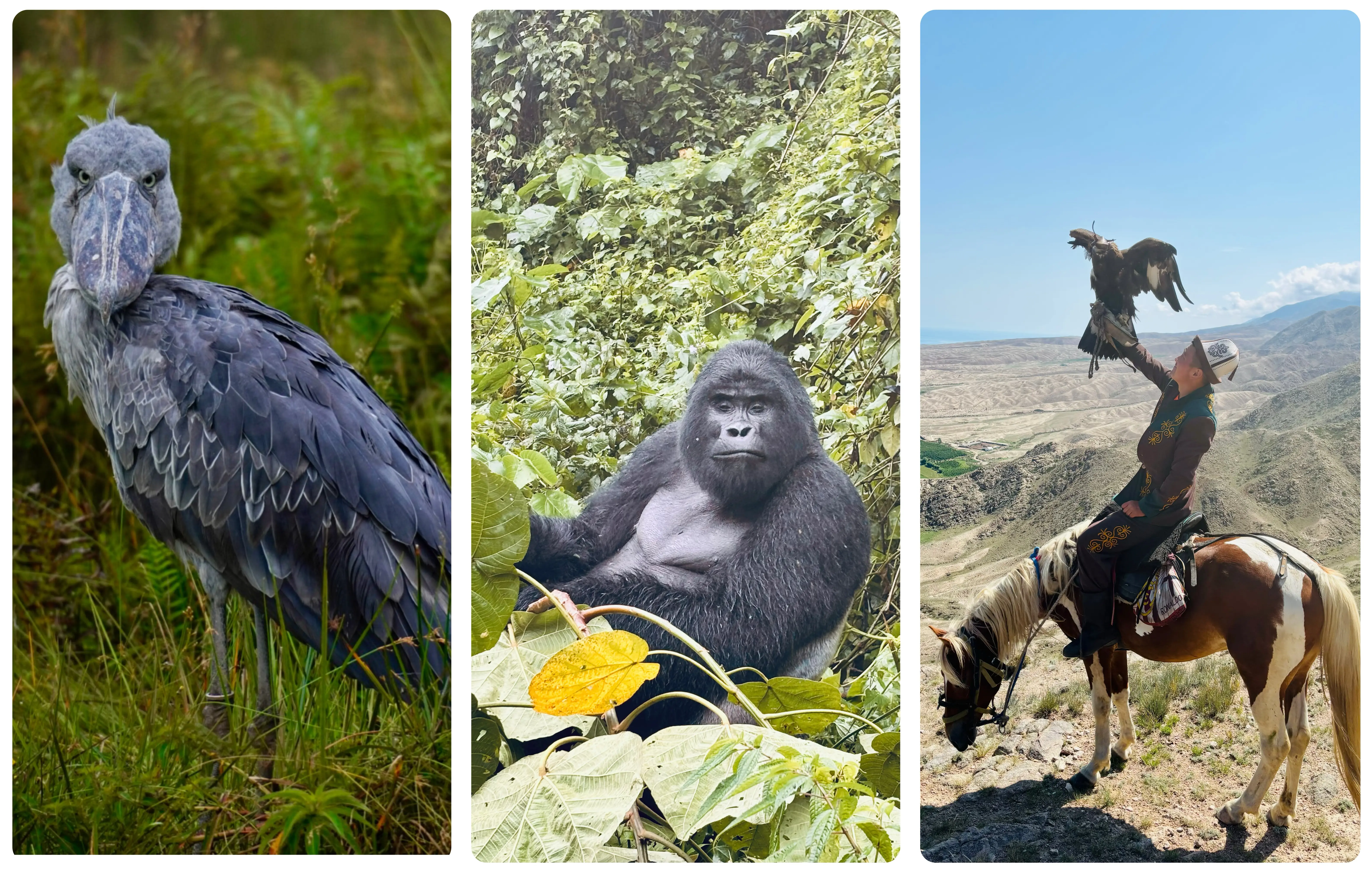
Indonesia, Kyrgyzstan, Croatia, and Uganda

Can I have a word?

  • Why Does AI Write Like... That?" (NYT Magazine): A writer's dissection of what makes AI writing so distinct -- and how its widespread use has led to the globalization of local language idiosyncracies. I loved the example of the Nigerian "delve" and the British MPs' use of "I rise to speak."
  • "Unparalleled Misalignments" (Ricki Heicklen): Just the most joyous list, for any of my fellow Wordplay/pun enthusiasts.
  • Who killed the narrative podcast?" (Rolling Stone): It seems the age of peak podcast is over... and there's an (economic) reason for that. Now it's all talking heads.
  • [podcast] Normal Gossip (h/t Urmila) - Uneven but frilly fun, the host shares a different (listener-submitted) gossipy story each episode.

I'm no expert but...

  • [podcast] The Retrievals Season 2: The Retrievals did it again with this new season, tackling a new source of (ignored) women's pain: the C-section. Apparently, epidurals fail a surprisingly high percentage of the time... and doctors simply don't listen enough to their female patients to do something about it (put the patient under general anesthesia). It is also an inspiring story of how big of a difference a normal citizen can make: The star of the story is a British (non-doctor) mom who in the end helps change the standards for all UK births/C-sections (!)

  • Parallel parking contest: Yes, There's a Parallel Parking Championship, and I was a Contender" (Car and Driver): A fun example of how locals can turn the mundane into a community bonding experience. This gave me so much joy (even as a pretty average parallel parker).

  • [book] Dead Money by Jacob Kerr: A fun whodunnit based in Silicon Valley, written by one of Airbnb's earliest employees. It features a lot of SF nonsense and general on-target panning of the tech industry.

Wanna bet?

Sports betting has got to be one of the biggest scourges of our modern times. Two particularly grim listens/reads:

  • [podcast] Against the Rules: Fans: The newest season of Michael Lewis' podcast is excellent, full of great, narratively immersive and investigative journalism. As someone who has never placed a sport bet, I learned a LOT about the industry... and about what different countries have learned about how to regulate (or ban) the industry. It made me think a lot of how we (including me!) were probably wrong about legalizing marijuana.

  • The ruinous growth of sports betting in South Africa" (Our Long Walk) - with some shocking stats and charts on what % of SA household incomes is spent on sports betting.

Conservation, Locals & Money (travel stories)

...
Read full post →

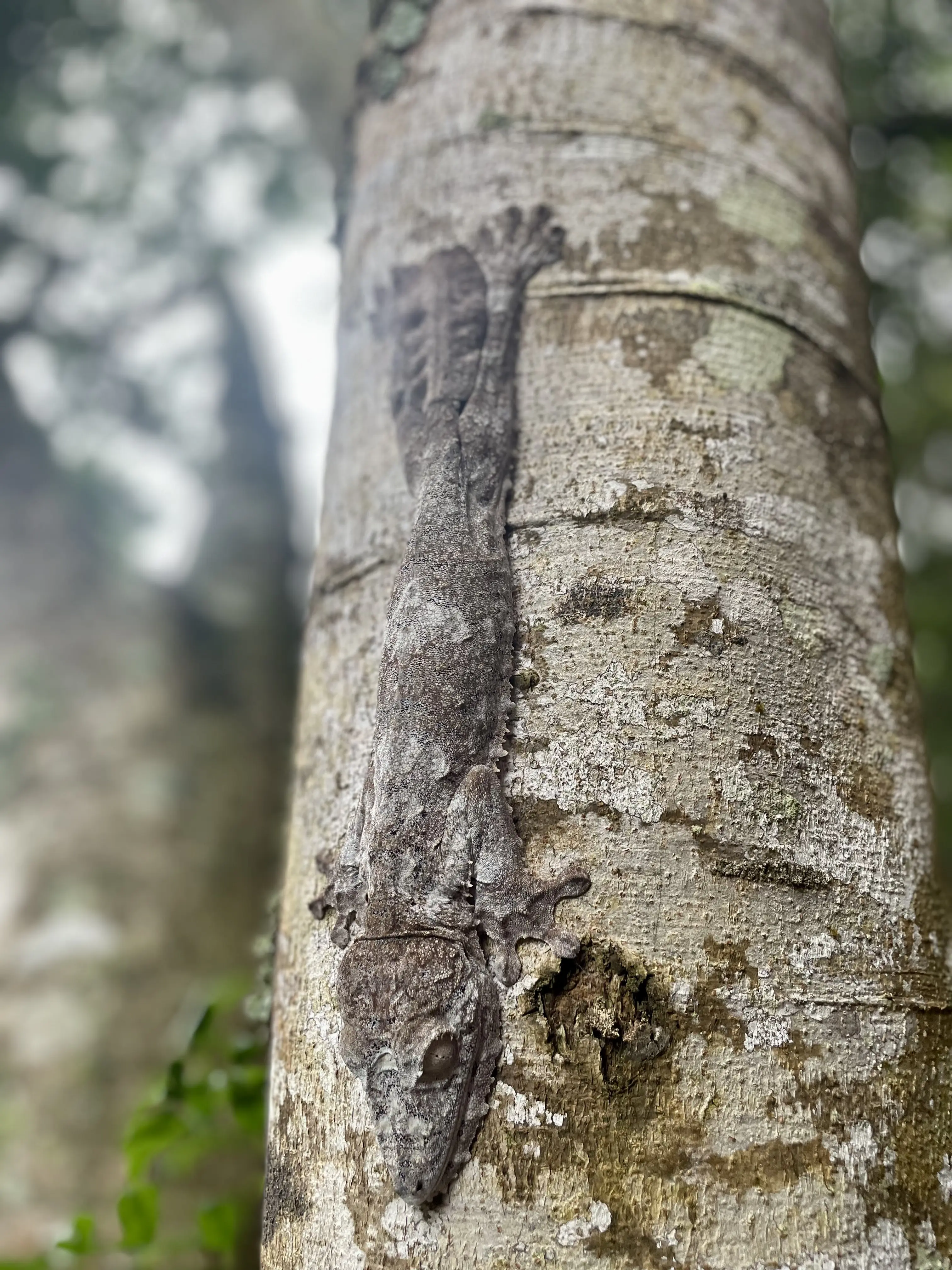
Namibia, Japan & Taiwan

Fix Me (Fix Society?)

  • "Under an L.A. freeway, a psychiatric rescue mission" (NYT): As a highly controversial intervention, some doctors are prescribing (and giving) antipsychotics to unhoused people in LA, despite the impossibility of proper diagnostics, the risks of medical side effects, and this population's questionable ability to give true consent. The goal though, is to provide unhoused people with enough psychological respite to make better decisions: to accept free housing, to try to give up street drugs, etc. I'm not totally sure what I think of it all, but it's an idea that's stayed with me, and I'm very curious to learn more about the results.

  • [podcast] Hysterical: The producers at Wondery describe it thusly: "Hysterical follows the outbreak of a mysterious illness afflicting otherwise healthy teenage girls in LeRoy, NY" — But in reality, it's hard to describe — a sort of medical mystery and audio cultural essay smushed together. And, more importantly, it's one of the best-produced and -written audio series I've heard in a long while. Funny, gripping, earnest, empathetic, etc.

What I'd Do For Money

  • [podcast] "Can money buy happiness?" (Planet Money): I graduated in 2010, at the same time as one of Nobel Prize winner Daniel Kahneman's research papers on happiness entered the cultural milieu, telling me (with scientific certainty), "money can buy happiness... but only until a point. After $60-90k, there are no happiness gains." Turns out, that's not quite right... (1) Money and happiness are correlated, basically with no max; and (2) Unhappiness does decrease around $100k in 2024 dollars (about $75k in 2010); and (3) The happiest people seem to get the best happiness returns from making even more money (their curve is exponential) because they know how to spend their money best, for most happiness improvements. This all sent me for more of a loop than intended. FIRE community, listen up?

  • "Priscilla, Queen of the rideshare mafia" (Wired): A real scam artist / Robin Hood of our time, and sure to become a movie/series (?!), this is the story of a Brazilian woman who stole IDs (including SSNs!) to help foreign illegals sign up as Uber drivers in the United States so they could actually earn money.

  • [book] Margos's Got Money Troubles by Rufi Thorpe: A romp of a book, featuring an oddball cast of characters trying to navigate the economic (and romantic) consequences of teen pregnancy. Bonus points for a really satisfying business/startup-minded look into running an OnlyFans. Read it before the Apple TV series comes out (yes, it's already been optioned.)

  • [book] All That Glitters: A Story of Friendship, Fraud, and Fine Art by Orlando Whitfield (h/t Werner): An uneven but still fascinating look into the fine art world, the megarich, and the strange economics of aesthetics.

Out to Sea

...

Read full post →

Playing Catch Up (2020-2024)

It's been four years (!!) since I last posted. So here's a big catch-up… the articles are all from the last few months, but the books sample from the last few (missing) years.

On lobbying, profiteering, and regulatory capture

Coming from a northern hemisphere country with relatively intact institutions, for a long time, I believed that government regulatory bodies generally made the right safety/health decisions the vast majority of the time. Of course, I knew that firms would lobby regulators, and there were problems of (rotating doors, regulatory capture, etc etc), but I assumed these led to small issues. But in the last decade, as the US' institutions get tested (and fail those tests), I've begun to realize just how much regulatory institutions have been failing all along.

  • "The Insulin Empire" (The Baffler): A sweeping overview of how insulin gets made, why it matters, and how capitalistic structures led it from being manufactured solely by nonprofit entities (The University of Toronto), to it turning into an "insulin cartel" run by "The Big 3" pharma companies. Through it, I also learned about more generic pharma practices: "evergreening" to extend IP and block competition, the privatization of AMPs, and the debate over what constitutes a "biosimilar" generic.

  • [book] Wasteland: The Secret World of Waste and the Urgent Search for a Cleaner Future by Oliver Franklin-Wallis: This was such a depressing read that I had to divvy it up into sections, reading full fiction novels in between. But it's also important and fascinating, walking through all the kinds of waste–landfill, food/agriculture, plastics, recycling, fashion (fabric/leather), human excrement, chemical, mining, energy/nuclear, etc.-- and the ways waste cycles across the world. Written by a British journalist, I also found it interesting to see in particular how waste gets treated in (theoretically more environmentally-friendly) Europe.

  • "How 3M Executives Convinced a Scientist the Forever Chemicals She Found in Human Blood Were Safe" (ProPublica): This one was a doozy, with 3M playing an almost cartoonishly villain role: Gaslighting a young female scientist (if you're finding PFOAs in everyone and in animals, then clearly you're doing the science wrong), blatantly ignoring and not disclosing health risk information, adding known risky substances to all kinds of food-adjacent materials (not just Teflon but also takeaway containers etc), paying paltry fines for their decades-long poor behavior, and then simply replacing one known carcinogenic "forever chemical" PFOA with a less-studied chemical in the same class. The last one is kind of on us though, right? We want non-stick; they gave us another version. It's difficult not to become alarmist after reading this.

On bodily fluids & conception

I (quite vocally) don't want to have children, but as a woman in her 30s, I'm surrounded by friends who are having children, already had children, or are battling to have children. And so the subject of parenthood has become at least somewhat interesting to me.

...

Read full post →

Mexico City (Quarantine Reading)

COVID

Feel free to skip this category (I know we've maybe all read too much on the topic), but here were some of my favorite pieces about the crisis, which are not 100% doom-and-gloom:

  • "In Veep's coronavirus episode, Selena Meyer would be… competent?" (Vulture): For fellow fans the White House parody, one former show writer penned a plot summary of what would have happened in the coronavirus episode. It provides some much-needed humor.

  • "We put too many people behind bars. This pandemic shows why that's not necessary." (Mother Jones): I wonder if one of the interesting ramifications of the pandemic will be whether we stop over-policing? (Then again, violently racist policing hasn't stopped…)

  • [PODCAST EPISODE] "Hotel Corona" (Rough Translation): I know that in the US, the pandemic has shown the socioeconomic divide more than it's been an equalizer. But this is a story of how, in one building in normally-divided Jerusalem, it has managed to create community. All the warm and fuzzy feels.

  • So many Planet Money episodes. Honestly, I felt like the podcast team was hitting a bit of a wall pre-corona, but its coverage of COVID issues has been spectacular. I particularly enjoyed "The Mask Mover," "Making it Work", "Buybacks and Bailouts", and "J Screwed."

  • "I tried hypnosis to deal with my coronavirus pandemic anxiety, and got something much weirder" (Vice): I know, this title/story is so Vice, but I fell for it. And honestly, it provided me with an entertaining read that was sort of akin to watching reality TV. I was fascinated by what people think they will get from "past life regression" (when a hypnotist helps you "remember" your past lives) and the techniques used to get patients to this kind of suggestible state. I also found it fascinating that they draw this clear moral red line against helping patients "remember" occurrences from this lifetime, as it's been proven that people can easily fool themselves into false memories. (The strength of belief and the delicacy of memory are topics I could read about endlessly.)

GOOD THINGS COME IN… PAIRS 👯‍♀️

Here are pieces I read that I think are better together, than apart:

  • Whale song: Invisibilia's "Two Beats a Minute" discusses how machine learning might help us decipher whales' language. Then, the first half of 99% Invisible's "The Natural Experiment" discussed how whale researchers will be able to listen to how whale song/communications might change when the animals are not constantly navigating around noisy cruise ships in Alaska.

  • ...

Read full post →

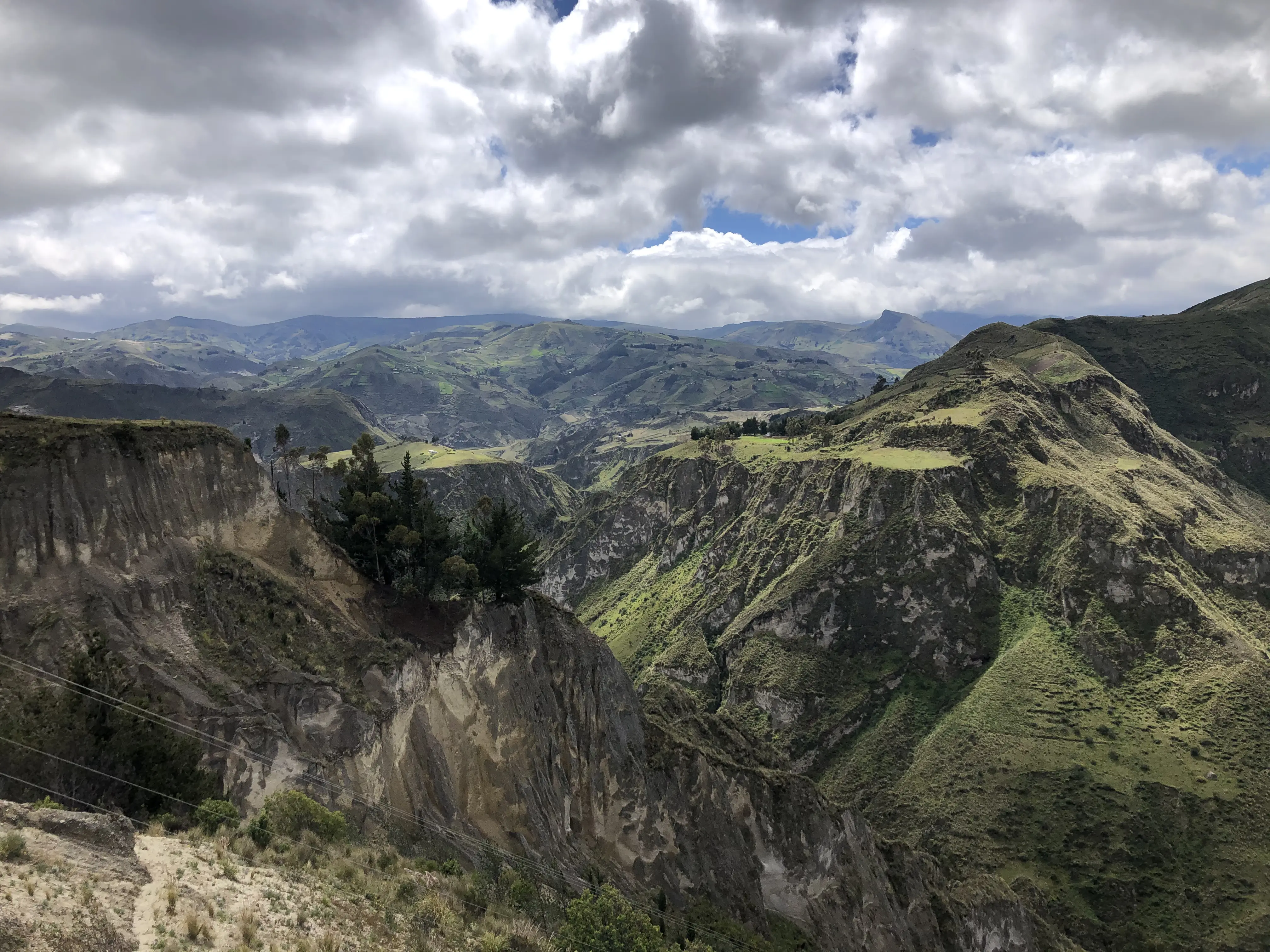
Ecuador (and a big catch-up)

Whooo it's been a while. Since the last post, I returned to each of my three "home bases": the U.S., South Africa, and then (now) Mexico City. And I also got a full-time job, as well as a couple part-time aerial acrobatics teaching gigs. So I forgot to post. So here's a bit catch-up post, PLUS some Ecuador reads (first international trip since being back in Mexico!):

ECUADOR

I cheated and read two books in English, and only half of them is by an Ecuadorian. BUT they were both great:

  • Savages by Joe Kane: Environmental activist and journalist Joe Kane tells the story of a small (c. 1500 person) Amazonian tribe called the Huaroni, whose ancestral land the Ecuadorian government has just agreed to open up to oil exploration. This book was AMAZING. Joe travels deep into the forest, befriends members of the tribe, and is therefore able to gain access to both fascinating descriptions of everyday life in that environment, as well as the many ethical quandaries that "development" brings up. To what extent does the government get to choose what a "good life" or "education" is? To what extent do 1500 people get to decide the economic fate of a country? Who gets to speak for (and make deals on behalf of) the Huaroni, who are a spread out, diverse group without a singular chief? If such oil exploration is inevitable, is there a "right" way to do it? This book was at turns funny, suspenseful, and deeply sad. I feel I am a better human for having read it.

  • The Queen of Water by Laura Resau and María Virginia Farinango**: Author Laura Resau collaborates with Ecuadorian María Virginia Farinango to tell the latter's story. In the 1980s, it was common for poor Quichua families to give away (sometimes for money) their young children to mestizo couples, to act as nannies/cooks/cleaners. María was one of those children, except she was also clever and feisty and managed to make something of herself, despite her circumstance. This is a YA book and sometimes felt overly simplistic, but in general the story was so amazing and enjoyable, that mostly I got over it. It was also an interesting book to read after Savages because in the former, the Quichua (the largest indigenous group in Ecuador, and the most "integrated") were often described as powerful and sophisticated, compared to the Huaroni. In this book, you got to see how they were still, until pretty recently, quite disenfranchised.

I also listened to a really great Radio Ambulante story about Ecuador:

  • **"Los extraterrestres" (*Radio Ambulante)*: In the 1940s, Radio Quito transmitted a radio play version of H.G. Wells' The War of the Worlds, and it was so realistic that residents began to believe that it was actual news: that the world, Ecuador included, was indeed being invaded by extraterrestrials. Fear, chaos, and violence ensue. This is a remarkable story that might seem "silly" (how could people believe such a thing, you might say), but I think actually sheds light on this amazingly important and delicate trust we have in journalism to tell us the "truth." If the New York Times, Washington Post, Guardian, CNN, etc etc. were all reporting the same alien invasion story, I too would believe it. (After all, what happens when you don't believe it? Then you become a conspiracy theorist, decrying everything as "fake news.")

BOOKISH FUN

...

Read full post →

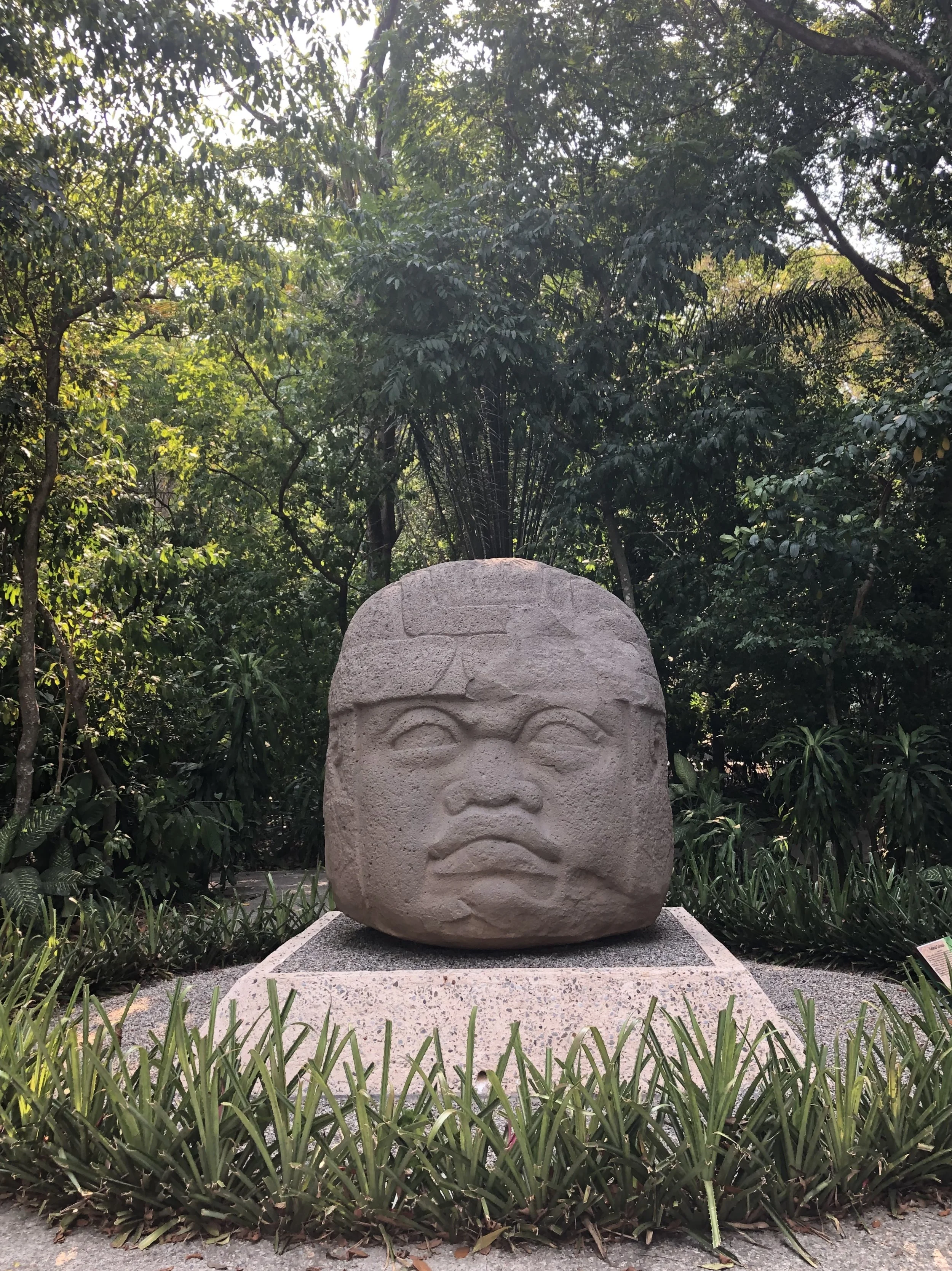
Mexico: Yucatan Peninsula, Tabasco, Veracruz, CDMX

Now that I've been in Mexico a while, and the travels are coming to a close… I'm going to have to figure out what to do with this blog! Perhaps each month I read stuff by an author from a different continent?

Anyway, until I figure that out, here are some things I've liked, with no particular geographic focus:

On things that need to change (and isn't it crazy they haven't already?)

  • "Tax Hero" (Planet Money): As someone who has done taxes in multiple countries, American taxes are indeed insane. This is a story of one professor proposing an easy solution to make American taxes SO MUCH better, and the TurboTax (and other accounting) lobbyists who shut down his campaign. It is everything that is wrong with policy / politics.

  • "Save Our Food. Free the Seed." (NYTimes): This opinion piece deftly argues (1) against patents on crop traits ("Utility patents restricted farmers' freedom to save and exchange seed and breeders' right to use the germplasm for research.") and (2) for greater government R&D investment in organic plant breeding (After all, "Organic growing reduces the use of harmful chemicals, improves the soil's ability to sequester carbon and retain water, and strengthens biodiversity.") I'm personally both pro-GMO and pro-organic farming methods (yes, that's a possible stance), and I worry about the ability of our monoculture food systems to handle the environmental changes to come.

On slow-moving environmental disasters

  • "If Seeing the World Helps Ruin It, Should We Stay Home?" (NYTimes): Of course I knew that my carbon footprint from this year was terrible. And yet, I still didn't quite expect this stat: The extra carbon emissions from one person's share of a one-way NY/LA (2500 mile) flight, shrinks the Arctic summer sea ice cover by 3 square meters, or 32 square feet. And that's a one way flight that isn't actually very long. GAHH.

  • "Depave Paradise" (99% Invisible): A two-parter about Mexico City, and the fascinating water problem that now plagues it. The city, situated in a natural basin with plenty of water, was constructed to get rid of all its rainfall to prevent flooding. As a result, now the city doesn't have enough water to sustain its growing population, and tapping groundwater aquifers has resulted in the city shrinking. The piece also discusses some potential solutions for this problem (depaving, rainwater capture, etc.). The podcast was particularly interesting for me, having lived through Cape Town's water crisis before AND now experiencing rainy season in Mexico City.

  • "Highway of Riches, Road to Ruin: Inside the Amazon's Deforestation Crisis" (Globe and Mail): A gorgeous multi-media piece by investigative journalists following the BR-163 highway through the Amazon rainforest. They speak to loggers, farmers, miners, conservationists, and government officials, to try to better understand what's happening on the ground, and why.

  • ...

Read full post →

Guatemala & Belize

Countries visited: Guatemala, Belize

LOCAL MEDIA

  • The Art of Political Murder by Francisco Goldman (Guatemala nonfiction): Confession: Try as I might, I only got through 74% of this book, which investigates the political murder of Bishop Gerardi, who headed up the human rights organization that published Nunca Más, a catalogue of the abuses and genocide committed against the Mayan people in the Civil War. Bishop Gerardi was murdered in 1998, but this book was only published in 2007, providing enough time to consider what the murder signified about Guatemala's budding democracy and whether things have changed since. Goldman, a half-Guatemalan writer/journalist, however, chooses to mostly focus on the minutiae of the case, turning it into a very long, beleaguered, non-page-turner true crime novel. I wish it had told the bigger story.

  • Cuentos, fábulas y lo demás es silencio by Augusto Monterroso // English: Complete Works and Other Stories (Guatemala fiction): I had never heard of him before, but apparently, in Latin America, Monterroso is known for his "micro-cuentos" (micro short stories) and political satire, and he is often grouped with other magical realist authors from Latin America. I found Monterroso's stories to be more wide-ranging in their tone/voice than Borges/Marquez/Llosa. That meant that I loved some of the stories (e.g. "Míster Taylor" is absolute perfection), but I found others to be odd and unsatisfying. In fact, "Diógenes También" was so baffling in Spanish that I ended up reading the English translation too, just in case; turns out, it's just a strange read in any language.

  • "J.. vs. Estados Unidos" (Radio Ambulante) (Guatemala nonfiction podcast): A story of the relative impunity of US Border Control agents.

  • Three Kings of Belize: A documentary on 3 Garifuna musicians. The Garifuna were descendants of would-be slaves whose boats ran ashore near Guatemala/Belize, and so remained free but in these foreign lands. They retain a Garifuna language, culture, and a style of Afro-Carribbean music.

ALL THE FEELS

  • "Inside the first Afghan women's ascent of Mount Noshaq" (Outside): An incredibly moving piece about Afghan woman mountaineers — It's a good reminder that empowerment doesn't just have to be about "soft" skills like literacy (although, of course, not knocking reading!); empowerment can come from giving people literal, physical power too. And that's precisely the story of this mountaineering non-profit: training women to be physically stronger, against all kinds of sometimes-violent obstacles.

  • Two recent and excellent Without Fail episodes feature people who are basically professionals at saying sorry to people: "The tragedy expert" compensates family members after catastrophes like terrorist attacks or school shootings, while Patty McCord (of Netflix HR fame) schools host Alex on "How to fire people"

ASSIGNING BLAME

...

Read full post →